
The 1000 Hours Outside Challenge, for Adults Who Have Jobs
A thousand hours a year is about 2.7 hours a day. Here's the math, and four smaller versions you can actually finish.
 Marc W.Updated

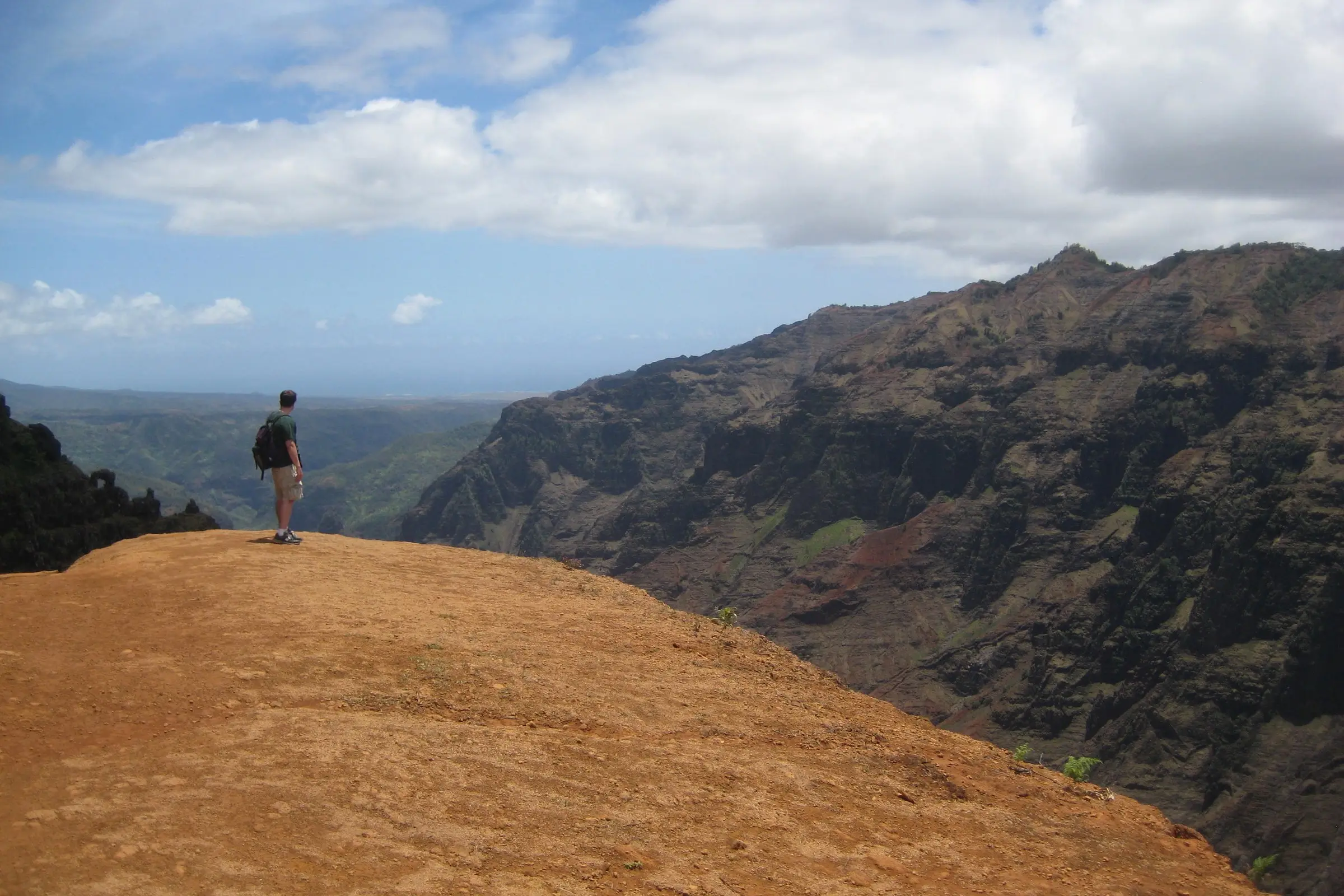
The 1000 Hours Outside challenge is exactly what it sounds like: spend 1000 hours outdoors in a year. It was built for families with kids. If you’re looking for the 1000 hours outside challenge for adults, the first thing to know is the math. A thousand hours a year is about 2.7 hours a day, every single day.
If you have a job with a roof, that’s a tall order. So this post does two things. It explains what the real challenge is and who runs it. Then it gives you scaled versions, from 100 hours up, that a person with a calendar full of meetings can finish.
What the 1000 Hours Outside challenge is
To be clear up front: this isn’t our challenge. It belongs to 1000 Hours Outside, an organization founded by Ginny Yurich. Its site puts it this way: “Each year, hundreds of thousands of families across the world commit to trying to spend 1000 hours outside in a 365 day period.” It offers its own app and free trackers for counting the hours.
It’s aimed at kids and families. The site describes its mission as “reclaiming childhood” and “reconnecting families”, and leads with its own comparison: that the average child spends 4 to 7 hours a day on screens and only 4 to 7 minutes a day in unstructured free play outside. (That’s the organization’s figure, quoted from its homepage. We haven’t traced it to a study.)
InsideHook’s explainer on the movement fills in the backstory. Yurich is a former math teacher in Southeastern Michigan with five children. The hours idea took shape after she read Charlotte Mason, a British educator from the turn of the 20th century who argued that children should spend four to six hours outside each day.
So the number wasn’t designed around a 9-to-5. It was designed around childhood. That matters when you try to borrow it.
Adults have picked it up anyway. Harvard Health described the challenge in 2024 as a way to motivate people to spend more time outdoors by trying to accumulate 1,000 hours of outdoor time over a year. No age limit in that sentence.
The honest math
Here’s what 1000 hours looks like broken down.
- Per day: 1000 divided by 365 is 2.74 hours. That’s about 2 hours and 44 minutes, with no days off.
- Per week: about 19 hours.
- Per month: about 83 hours.
- In one lump: 1000 hours is 41.7 full days. Almost six weeks of your year, around the clock, outdoors.
2.7hours a day
What the full challenge asks for, on average, every day of the year.
1000 hours divided by 365 daysFor scale: a full-time job at 40 hours a week for 50 weeks is 2,000 hours. The full challenge is half as many hours as that, on top of it.
The challenge doesn’t expect a flat 2.7 hours daily, to be fair. According to InsideHook, the guidance is seasonal: average one hour a day in January and February, and aim for five hours a day in June and July. That’s sensible for a family with kids home for the summer. For an adult with a job, five hours a day in June is 35 hours a week. That’s nearly a second full-time job, held outdoors.
People bounce off it. InsideHook quotes one participant: “We tried so hard but 4 and 5 hours a day just isn’t possible.”
None of this is a knock on the challenge. It’s a good idea with a big number. It just wasn’t sized for you.
The 1000 hours outside challenge for adults: pick your size
You don’t need the full thousand to get something out of this. You need a number you’ll still be chasing in March. Here are five tiers with the arithmetic done.
| Yearly target | What it takes | Who it fits |
|---|---|---|
| 100 hours | 2 hours a week. About 17 minutes a day. | Starting from close to zero |
| 180 hours | 30 minutes a day | A daily walk person |
| 365 hours | 1 hour a day | Walk plus an outdoor lunch, or a dog |
| 500 hours | 30 minutes each weekday, 3.5 hours each weekend day | Weekend hikers, gardeners, sideline parents |
| 1000 hours | 2.7 hours a day | Outdoor jobs, long summers, serious intent |
Checking the work:
- 100 hours: 2 hours a week for 52 weeks is 104 hours.
- 180 hours: 30 minutes a day for 365 days is 182.5 hours.
- 365 hours: one a day. You can do that one yourself.
- 500 hours: a year has about 261 weekdays and 104 weekend days. 261 half hours is 130.5 hours. 104 days at 3.5 hours is 364 hours. Total: about 495.
Why 100 hours is a real goal, not a consolation prize
The 100-hour tier lines up with the best-known research number in this area. A 2019 study of 19,806 people in England found that those who spent at least 120 minutes a week in nature were more likely to report good health and high wellbeing than those who spent none. The link peaked at 200 to 300 minutes a week, with no further gain beyond that.
Two caveats. It’s a one-time survey, so it shows a link, not cause and effect. And it measured self-reported health and wellbeing, not everything time outside might do for you.
Still, do the conversion. 120 minutes a week is 104 hours a year. The 200 to 300 minute peak is about 173 to 260 hours a year. By that study’s measure, the benefit showed up at roughly a tenth of the way to 1000 and flattened out by about a quarter of the way. We walk through the daily version in how much time outside per day you actually need.
That doesn’t make 1000 hours pointless. There are plenty of reasons to be outside that a wellbeing survey doesn’t capture, like liking it. It does mean 100 hours isn’t the kiddie pool.
Start with 30 x 30
Before you commit to a year of anything, run a pilot. Thirty minutes outside a day, for 30 days.
That’s 15 hours in a month. Small enough to fit around work. Long enough to find out where the time actually comes from in your week, which is the thing you need to know before choosing a tier.
Hold that pace for a year and you land at about 180 hours, which is the second tier. If 30 days in you’re regularly running over, move up. If you’re scraping to make it, drop to the 100-hour tier and feel fine about it.
This is the size of habit GTFO works with. It sends the nudge to get you out the door, and shows your hours outside this month and your days outside this year, so you can see how it’s adding up. (GTFO is its own thing, not part of 1000 Hours Outside. If you want the official thousand-hour trackers, they’re on that organization’s site.)
Where the hours hide when you work full time
Nobody finds 2.7 spare hours lying around. You find 20 minutes here and 90 there. The usual places:
- Lunch. Twenty minutes outside, five days a week, is about 87 hours a year on its own. That’s most of the 100-hour tier before you’ve changed anything else.
- The commute. Get off a stop early. Park at the far end. Walk the last ten minutes.
- Calls that don’t need a screen. One walking call a week at 30 minutes is 26 hours a year.
- The first coffee. Drink it on the steps instead of at the counter.
- After dinner. A 20-minute loop while it’s still light.
- Weekends. This is where the big numbers live. One 3-hour outing every weekend is 156 hours a year.
- Things you already do, moved outdoors. Reading. Eating. Catching up with a friend. A standing outdoor habit is also the easiest thing to invite someone into.
Add lunch (87), a weekly walking call (26) and a weekend outing (156) and you’re at 269 hours. No heroics, no lifestyle overhaul, and you’re past the top of the range where that 2019 study saw the benefit level off.
How to count without making it a second job
A few rules that keep the tracking from killing the fun. (For when tracking helps and when it backfires, see do streaks work?)
- Round to the nearest 15 minutes. You’re not billing a client.
- Decide what counts once, then stop debating. Our suggestion: you’re outdoors, on purpose, for at least 10 minutes. Walking across a parking lot doesn’t count. Eating lunch in the park does.
- Log it the same day. Reconstructing a week from memory is how people quit.
- Watch the monthly number, not the daily one. A rainy Tuesday means nothing. A thin month tells you something.
- Don’t punish a miss. You’ll have weeks that fall apart. Pick it back up. The year is long.
Should you still go for the full thousand?
If you want to, yes. Some adults are well placed for it: people who work outdoors, people with long summer breaks, parents who are already at the playground and the sideline every weekend, people who camp. If that’s you, the hours are mostly there already and the challenge is a fun way to notice them.
If it isn’t you, treat 1000 as a direction, not a pass or fail. Someone who aims for a thousand and lands on 400 spent 400 hours outside. That’s about 300 more than the 100-hour tier and a great deal more than they’d have managed with no target at all.
The mistake is letting the big number talk you out of the small one. Start with 30 days. Pick a tier. Count the hours.
More on why time outside is worth counting in the first place: Touch Grass: The Science of Time Outside.
Quick answers
- What is the 1000 Hours Outside challenge?
- It is a challenge run by 1000 Hours Outside, founded by Ginny Yurich, in which families try to spend 1000 hours outside in a 365 day period. It is aimed mainly at children and families.
- How many hours a day is 1000 hours outside?
- About 2.7 hours a day, every day, or roughly 2 hours and 44 minutes. Per week it is about 19 hours.
- Can adults do the 1000 Hours Outside challenge?
- Yes, nothing stops you. But 2.7 hours a day is hard to fit around a full-time job, so many adults do better with a scaled target such as 100, 180 or 365 hours a year.
- What is a realistic outside goal for an adult with a job?
- About 100 hours a year is a solid floor: it matches the 120 minutes a week that a 2019 study linked to better health and wellbeing. One hour a day gets you 365 hours.
- Is GTFO part of 1000 Hours Outside?
- No. 1000 Hours Outside is a separate organization with its own app and trackers. GTFO is an unrelated iOS app, not launched yet, that nudges you to get outside every day.
Sources
- 1000 Hours Outside1000 Hours Outside. Checked 2026-10-09.
- The '1000 Hours Outside' Movement, ExplainedInsideHook. Checked 2026-10-09.
- Try this: Take it outsideHarvard Health Publishing. Checked 2026-10-09.
- Spending at least 120 minutes a week in nature is associated with good health and wellbeingScientific Reports (full text on PubMed Central). Checked 2026-10-09.
GTFO is a habit app, not medical advice. If you spot an error here, email [email protected].