
How to Make (and Keep) Friends as an Adult
Friendship runs on repeated hours with the same people. School used to supply them. Now you have to put them on the calendar yourself.
 Marc W.Updated

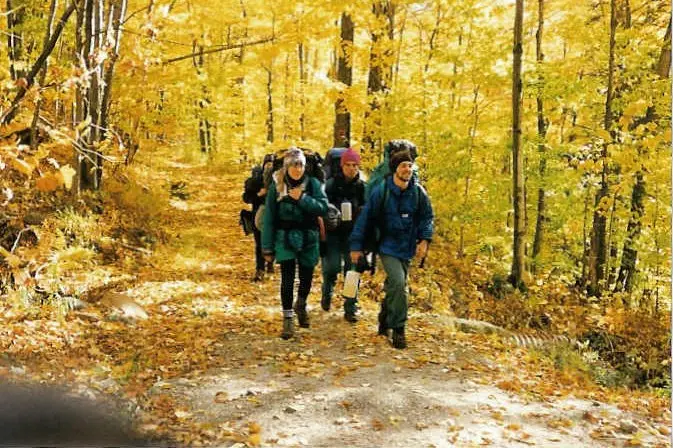
Here is how to make friends as an adult, in one sentence: pick one thing you do at the same time every week, then invite people into it until a couple of them keep coming.
That’s most of it. Friendship is built out of repeated hours with the same people. School handed you those hours without asking. Adult life doesn’t, so you have to book them. The rest of this guide is the detail: how many hours, where the people come from, what to say, and how to keep the thing going once it starts.
Why it’s so hard to make friends as an adult
You didn’t get worse at it. The supply of free hours dried up.
A researcher at the University of Kansas, Jeffrey Hall, tried to put a number on friendship. Using two samples (355 adults who had moved in the past six months, and 112 college freshmen he followed for several weeks), he estimated that it takes roughly 50 hours together to go from acquaintance to casual friend, 90 hours to get to “friend”, and more than 200 hours to get to close friend.
50hours
Roughly the time together it takes to turn an acquaintance into a casual friend. Close friend: more than 200.
Hall, University of Kansas, 2018Those hours are self-reported, and they come from people who had just moved, so treat them as a ballpark. The scale is what matters. At 16, you hit 50 hours with someone in two weeks of school. At 34, seeing someone for an hour a week, it takes a year.
There’s a second catch in the same study. Not all hours count the same. Time spent hanging out counted. Hours spent working together “just don’t count as much”. So the coworker you’ve sat near for three years can still be an acquaintance.
Meanwhile, the hours themselves have been shrinking. The 2023 Surgeon General’s advisory on social connection cites time-use data showing that time spent with friends in person dropped from about 60 minutes a day in 2003 to about 20 minutes a day in 2020. That last year is a pandemic year, so it’s the low point of the trend, but the advisory describes the decline as steady across the whole period.
How many people are in this spot
The honest answer is “it depends who asked and how”.
- The Survey Center on American Life surveyed 2,019 US adults online in May 2021. 12 percent said they had no close friends. In a 1990 Gallup poll, 3 percent said the same. The Center flags its own caveat: the 1990 poll was done by phone, and people may have been less willing to tell a live interviewer they had no friends.
- Pew Research Center asked 5,057 US adults in July 2023. 8 percent said they had no close friends. 53 percent had between one and four. 38 percent had five or more.
So: somewhere around one adult in ten has nobody close, and about half have a short list. If you’re looking at your phone wondering who you’d even text, you are not a strange case. You’re a common one.
How to make friends as an adult: build a standing plan
Most advice says “join a club” or “put yourself out there”. Fine, but it skips the mechanism. You need the same people, repeatedly, in time that isn’t work. The cleanest way to get that is a standing plan: one thing, same day, same time, that happens whether or not anyone else comes.
A standing plan fixes the three things that kill adult friendships early.
It removes the scheduling. “We should hang out sometime” requires two calendars, a venue and a decision. “I walk the reservoir loop at 8 on Saturdays, come” requires a yes.
It lowers the stakes. You’re going anyway. If they can’t make it, nothing is canceled and nobody is rejected. You ask again next week without it meaning anything.
It stacks hours. One coffee is one hour. A weekly walk is 50 hours by this time next year, which is the first number in Hall’s study.
Pick the thing
Pick something you’d do alone. That’s the test. If the plan only works when someone shows up, it will die the first week nobody does.
Good candidates are boring on purpose: a walk, a run, a dog loop, a Sunday hike, a lap of the farmers market, a lunchtime walk around the block from the office. It should cost nothing, need no booking, and work for someone who is not as fit as you.
Same time, same place
“Saturdays at 8, the north gate” beats “some weekend morning”. People can only join a plan they can predict. A fixed slot also means the invitation never expires. Someone who said no in March can turn up in June without a conversation about it.
Why outside works well
Three practical reasons, and one bonus.
- Walking next to someone is easier than sitting across from them. Silence is normal on a walk. At a table it’s a problem to solve.
- It’s free and it scales. One person or five, no reservation.
- It has a natural end. A loop takes as long as a loop takes. Nobody has to invent an exit.
The bonus: time outside is good for you on its own. A study of 19,806 people in England found that those who spent at least 120 minutes a week in nature were more likely to report good health and high wellbeing than those who spent none. It’s a survey snapshot, so it shows a link, not a cause. Still, if nobody comes this week, you didn’t waste the hour.
Where GTFO fits, and where it doesn’t
GTFO won’t find you friends. It gets you out the door, and that’s where you meet them.
What it does is your half: the nudge that makes sure the plan you’re inviting people into actually exists every week. The inviting is still on you.
Where the people come from
You probably don’t need strangers. You need to promote some acquaintances.
Make a short list of people you already like a bit and see only by accident:
- The coworker you always end up talking to at the coffee machine.
- A neighbor you nod at.
- The other parent at pickup who seems normal.
- Someone from the gym, the class or the league whose name you know.
- An old friend who lives in the same city and somehow you haven’t seen in two years.
Hall’s advice from the same Kansas study is to “switch up the context”. If you know someone from one place, invite them to a second one. It signals that you’d like to be friends, without anyone having to say so out loud.
If your list is empty, the move is the same in a different order. Go somewhere that repeats (a run club, a volunteer shift, a class, a regular pickup game) and keep going back. The first visit is for nothing. By the fourth, you recognize people, and they recognize you.
Men often get stuck at a slightly different point, and there’s good data on it. That’s covered in how to make friends as an adult man.
The ask
This is the part people skip. It feels like a big deal. The research says it’s a smaller deal than you think, for two reasons.
First, people like you more than you assume. In a set of studies published in Psychological Science in 2018, researchers found that after conversations, people systematically underestimated how much the other person liked them. They called it the liking gap. It showed up between strangers in a lab and between college dorm mates over several months.
Second, people like hearing from you more than you assume. A series of preregistered experiments published in the Journal of Personality and Social Psychology found a consistent underestimation of how much other people appreciate being reached out to. The effect was larger when the contact was a surprise and when the two people were not especially close. In other words, the text you feel weirdest about sending is the one most likely to land well.
So the ask can be short:
I walk the river path Saturdays at 8. You should come this week.
Specific thing, specific time, no pressure. For more wording, including what to send to someone you haven’t spoken to in a year, see how to ask a friend to hang out.
What to actually do together
Drinks are the default adult plan because they need no planning. That works until it doesn’t: it’s expensive, it’s always at night, and it’s hard to do weekly.
You want things that are cheap, repeatable and easy to say yes to. Walks. A standing breakfast. A lap of a market. Throwing a ball in a park. There’s a full list, sorted by how much time you have, in things to do with friends that aren’t drinking.
The rule for choosing: pick the thing you could do again next week without anyone having to organize it.
How to keep friends as an adult
Making a friend and keeping one are the same activity. Both are hours. The difference is that keeping feels optional, so it’s the first thing dropped when work gets loud.
A few things that help.
Keep the slot, change the thing. If Saturday at 8 is the walk, it stays Saturday at 8 when it rains. It just becomes coffee under an awning. Protect the time, not the activity.
Let people miss. A standing plan that punishes absences dies fast. Someone skips three weeks, then comes back. Say “good to see you” and start walking. No audit.
Be the one who texts. Somebody has to send the Friday “still on for 8?” message. It’s you. The reaching-out research above says the other person minds this much less than you fear.
Go alone when you have to. Some weeks nobody can make it. Go anyway. The plan existing every week is what makes it safe to invite people into. A plan that only happens when attendance is good is just an event.
Don’t count on one person. Invite more than one. Not because any of them is a backup, but because groups survive a busy month better than pairs do.
A four-week start
Week 1. Choose the thing, the day and the time. Do it alone. Write down three people you’d be glad to see there.
Week 2. Do it again. Text the first person the specific invite. If it’s a no, say “no worries, I’m there every week” and mean it.
Week 3. Do it again. Invite the second person. If the first one came, tell them same time next week.
Week 4. Do it again. By now you have a habit four weeks old and at least two people who know where you are on Saturday mornings.
That’s not a friend group yet. It’s the start of the first 50 hours. Morning’s not going to walk itself.
Quick answers
- Why is it so hard to make friends as an adult?
- Friendship takes a lot of repeated, unplanned time with the same people, and adult life stops supplying it. School and shared housing gave you those hours for free. After that, you have to schedule them on purpose.
- How long does it take to make a friend as an adult?
- One University of Kansas study estimated roughly 50 hours together to go from acquaintance to casual friend, 90 hours to become a friend, and more than 200 hours to become close friends. Those are estimates from two samples, not a stopwatch, but the scale is right: it takes months of regular contact.
- Where do adults actually meet new friends?
- Mostly in places they go back to: work, the neighborhood, a class, a team, a regular walk or run. Repetition matters more than the venue. One event rarely does it. Seeing the same faces every week often does.
- How do I keep friends once I have them?
- Put a recurring plan on the calendar so nobody has to organize each meetup from scratch. A weekly or monthly standing plan survives busy stretches far better than 'we should catch up soon'.
- Does GTFO help you find friends?
- No. GTFO won't find you friends. It gets you out the door, and a habit that happens at the same time every week is an easy thing to invite a friend to.
Sources
- How to make friends? Study reveals how many hours it takesUniversity of Kansas News. Checked 2026-10-09.
- Our Epidemic of Loneliness and Isolation: The U.S. Surgeon General's Advisory on the Healing Effects of Social Connection and CommunityU.S. Department of Health and Human Services (archived copy). Checked 2026-10-09.
- The State of American Friendship: Change, Challenges, and LossSurvey Center on American Life. Checked 2026-10-09.
- How many close friends do Americans have?Pew Research Center. Checked 2026-10-09.
- The Liking Gap in Conversations: Do People Like Us More Than We Think?Psychological Science (PubMed record). Checked 2026-10-09.
- The surprise of reaching out: Appreciated more than we thinkJournal of Personality and Social Psychology (PubMed record). Checked 2026-10-09.
- Spending at least 120 minutes a week in nature is associated with good health and wellbeingScientific Reports. Checked 2026-10-09.
GTFO is a habit app, not medical advice. If you spot an error here, email [email protected].